
Egypt
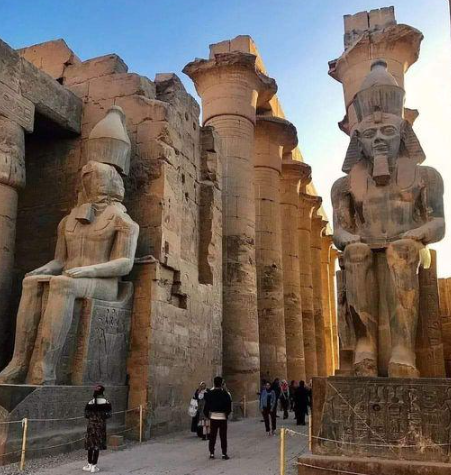
Statue of Ramesses II
One of the colossal statues of Ramesses II (on the right) located at the Karnak Temple complex in Luxor, Egypt. The statue represents Ramesses II, one of ancient Egypt’s most powerful and celebrated pharaohs, who ruled during the 19th Dynasty (1279–1213 BCE, around the time of the Exodus)
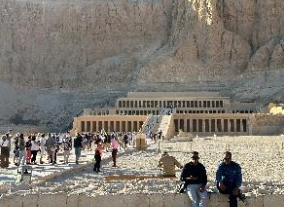
The Temple of Hatshepsut
The Temple of Hatshepsut is a magnificent mortuary temple built for Pharaoh Hatshepsut, one of ancient Egypt’s most successful female rulers. It is an architectural masterpiece that is integrated with the surrounding landscape.
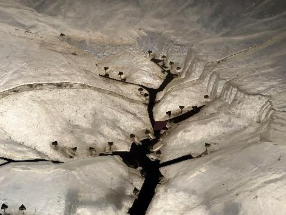
The Valley of Kings
A model of the Valley of the Kings, an ancient burial site in Egypt where many pharaohs, queens, and high-ranking officials of the New Kingdom (16th to 11th centuries BCE) were laid to rest. Located on the west bank of the Nile near Luxor (ancient Thebes), this secluded desert valley served as the royal necropolis for over 500 years
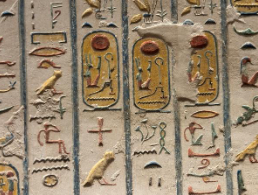
Hieroglyphics
This is an image of ancient Egyptian hieroglyphs, carved and painted into a stone surface. The image includes several cartouches (the oval shapes enclosing hieroglyphs), which traditionally contain royal names—typically the names of pharaohs or gods.
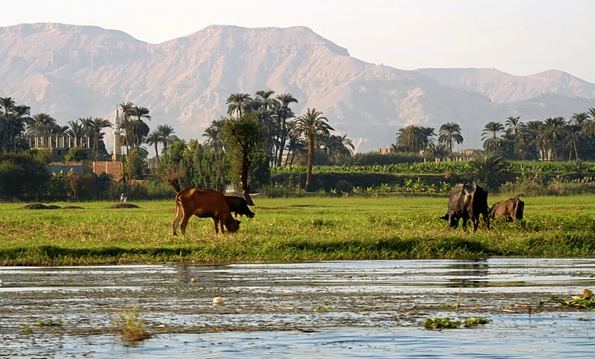
Nile Cows
“And behold, there came up out of the Nile seven cows, attractive and plump, and they fed in the reed grass” (Gen. 41:2-3 ESV). Even today it is possible to see cows on the banks of the Nile
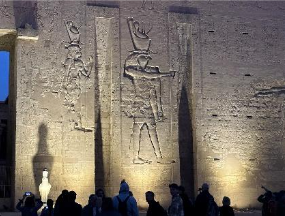
Carvings at the Temple of Horus
This image shows the relief carvings on the walls of the Temple of Horus at Edfu, one of the best-preserved temples in Egypt. The temple, dedicated to the falcon-headed god Horus, is located in the city of Edfu, between Luxor and Aswan
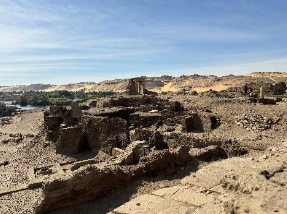
Elephantine Island
Elephantine Island, once a thriving Egyptian frontier town, housed a unique Jewish community in the 5th century BCE that built its own temple—distinct from Jerusalem’s. Ancient papyri found there reveal everyday life, legal contracts, and even appeals to rebuild their temple after it was destroyed.
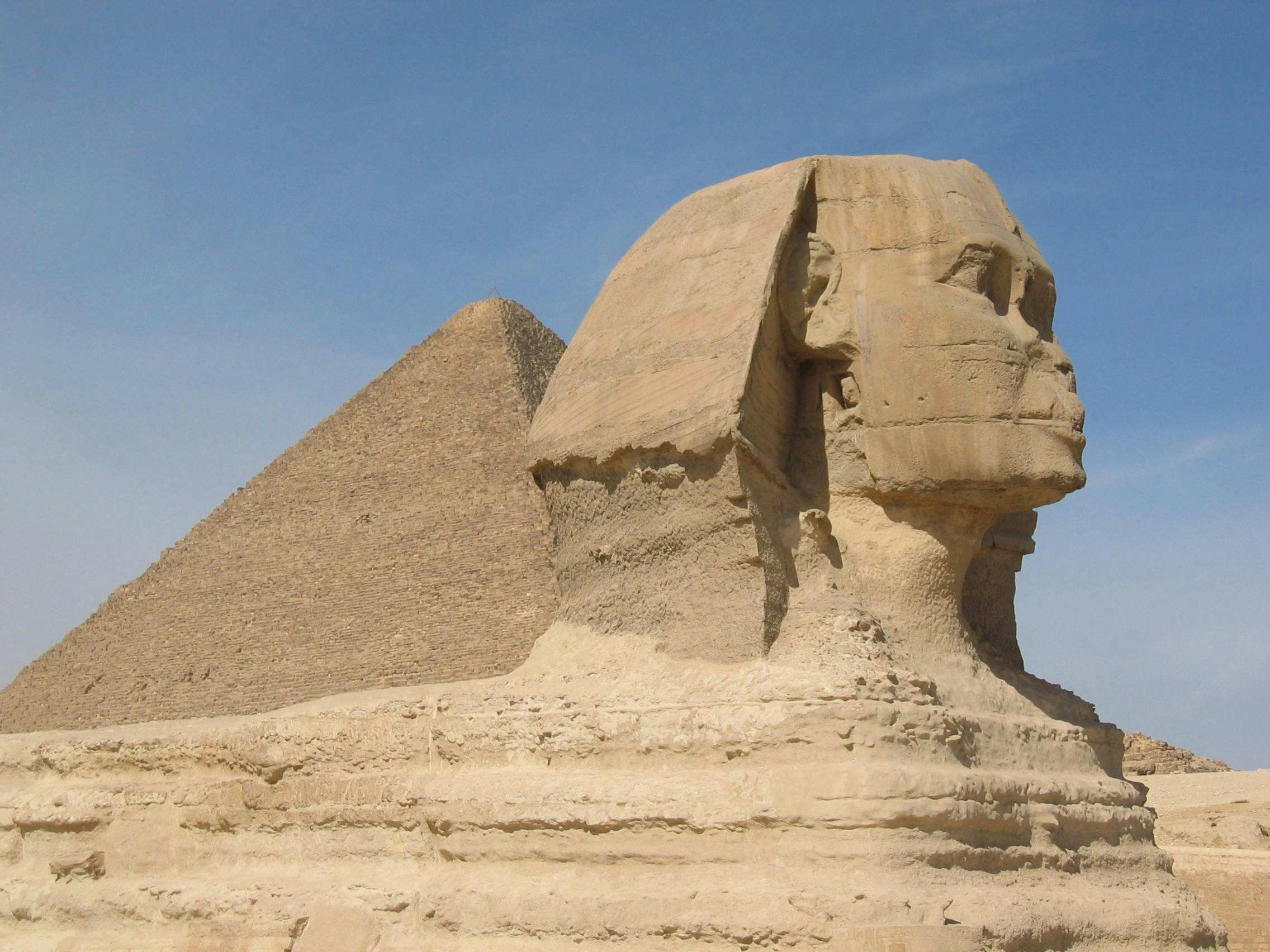
The Sphinx and Great Pyramids
The Great Sphinx of Giza, carved from a single limestone ridge, is the world’s largest monolith statue and still puzzles scholars with its missing nose and uncertain origin. Nearby, the Great Pyramid of Khufu is aligned so precisely with the cardinal points that modern technology struggles to match its accuracy.